
In today’s world of electrical and electronic products, safety standards help users understand how well a device is protected against external elements. One such standard you may frequently encounter is the IP rating system. Among these ratings, IP20 is one of the most commonly used, especially for indoor electrical equipment and components.
When people search for the meaning of IP20, they are usually trying to understand what level of protection it offers and where it can be safely used. According to industry explanations such as those found on IP20, this rating plays a specific role in defining protection against solid objects but not against liquids. Understanding this distinction is essential for choosing the right equipment for the right environment.
What Is an IP Rating?
An IP rating, or Ingress Protection rating, is an international standard defined by the IEC (International Electrotechnical Commission). It classifies how well an electrical enclosure resists the intrusion of solid objects, dust, accidental contact, and water. The rating is expressed using two digits following the letters “IP.”
Each digit in the IP rating has a specific meaning. The first digit relates to protection against solid objects, while the second digit refers to protection against liquids. This standardized system allows manufacturers, engineers, and consumers to quickly assess whether a product is suitable for a particular environment.
Breaking Down the IP20 Rating
To understand IP20, it helps to examine each character in the rating:
- IP: Stands for Ingress Protection.
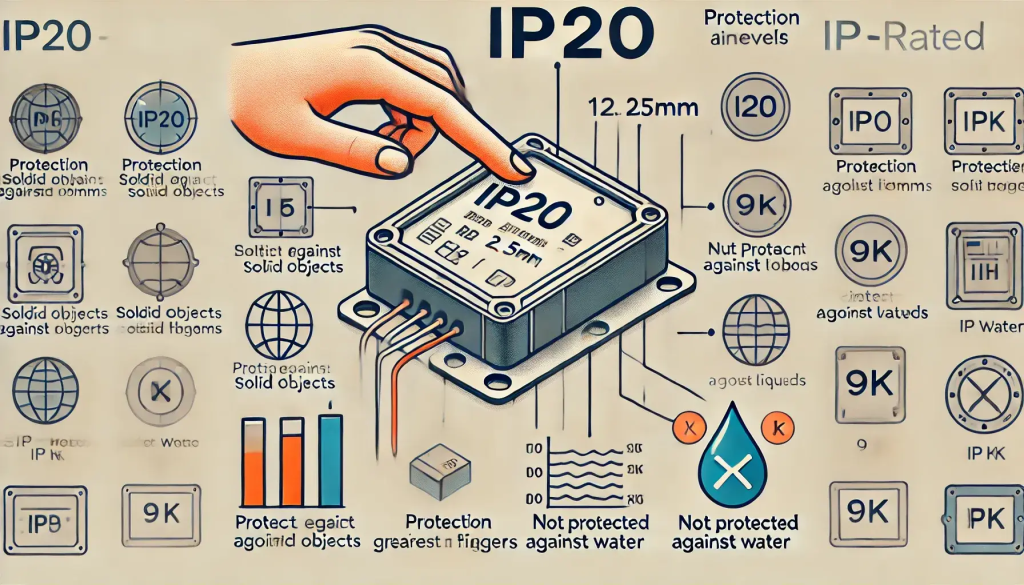
- First digit (2): Indicates protection against solid objects larger than 12.5 millimeters.
- Second digit (0): Indicates no protection against water.
This combination means that IP20-rated equipment is protected against fingers or similar objects touching live or internal components, but it offers no defense against moisture or liquids of any kind.
What Does the First Digit “2” Mean?
The first digit in IP20 is “2,” which specifies the level of protection against solid objects. A rating of 2 means the enclosure prevents access to hazardous parts using a finger or objects of similar size. This level of protection is commonly referred to as “finger-safe.”
In practical terms, this makes IP20 equipment suitable for controlled indoor environments where accidental contact is a concern, but exposure to dust or small particles is minimal. It does not protect against fine dust, tools, or wires, which would require higher IP ratings.
What Does the Second Digit “0” Mean?
The second digit in IP20 is “0,” which signifies no protection against water. This means the enclosure is not designed to withstand dripping, splashing, spraying, or immersion in water.
Because of this limitation, IP20-rated products must be installed in dry locations. Any exposure to moisture could compromise safety, functionality, or both. This is one of the most important factors to consider when deciding whether IP20 is appropriate for a specific application.
Common Applications of IP20-Rated Products
IP20 protection is widely used in environments where electrical safety is important, but environmental exposure is minimal. Typical applications include:
- Indoor electrical panels and distribution boards
- LED drivers and power supplies installed in dry rooms
- Control cabinets located in protected indoor areas
- Lighting fixtures designed for indoor use
- Electronic components housed inside larger enclosures
In these situations, the primary concern is preventing accidental contact with live parts rather than shielding the equipment from dust or water.
Where IP20 Should Not Be Used
While IP20 is useful in many scenarios, it is not suitable for all environments. Equipment with this rating should not be installed in areas where water, humidity, or dust is present.
Unsuitable locations include bathrooms, kitchens, outdoor areas, industrial workshops with airborne particles, and any space exposed to rain or cleaning sprays. In such cases, higher IP ratings such as IP44, IP54, or IP65 are more appropriate, depending on the level of exposure.
IP20 vs Other IP Ratings
Comparing IP20 with other IP ratings can help clarify its limitations and advantages. For example, IP44 provides protection against small solid objects and water splashes, making it suitable for bathrooms. IP65 offers complete dust protection and resistance to water jets, ideal for outdoor use.
IP20, by contrast, focuses solely on basic contact protection. It is cost-effective and practical when environmental hazards are minimal, but it should never be used as a substitute for higher-rated enclosures in demanding conditions.
Advantages of Using IP20-Rated Equipment
One of the main benefits of IP20-rated products is simplicity. These enclosures are often lighter, more compact, and easier to install than higher-rated alternatives. Because they require fewer materials and less complex sealing, they are typically more affordable.
IP20 products are also easier to ventilate, which can be an advantage for electronic components that generate heat. In controlled environments such as offices, residential interiors, and server rooms, this balance of protection and airflow is often ideal.
Limitations of IP20 Protection
Despite its advantages, IP20 has clear limitations. The lack of water protection is the most significant drawback. Even minor exposure to moisture can pose safety risks or lead to equipment failure.
Additionally, IP20 does not protect against dust or small particles. Over time, dust accumulation inside an enclosure can affect performance, particularly for sensitive electronic components. This makes regular maintenance and proper placement especially important.
How to Choose the Right IP Rating
Selecting the appropriate IP rating requires careful consideration of the installation environment. Factors such as humidity, dust levels, likelihood of contact, and cleaning procedures all play a role.
If the equipment will be installed in a dry, enclosed, and supervised indoor area, IP20 may be sufficient. However, if there is any risk of liquid exposure or dust ingress, opting for a higher IP rating is a safer choice.
IP20 in Lighting and Electrical Systems
IP20 is especially common in lighting systems designed for indoor use. Many recessed lights, LED strips, and control units carry this rating because they are installed away from moisture sources.
In electrical systems, IP20-rated components are often placed inside larger cabinets that provide additional protection. This layered approach allows manufacturers and installers to balance cost, safety, and performance effectively.
Safety Considerations for IP20 Installations
Even though IP20 offers basic protection, proper installation practices are still essential. Equipment should be securely mounted, inaccessible to unauthorized users, and placed away from any potential sources of water.
Clear labeling and adherence to local electrical codes further enhance safety. When used correctly, IP20-rated products can perform reliably for many years in suitable environments.
Understanding IP Ratings as a Buyer
For buyers and specifiers, understanding IP ratings like IP20 helps prevent costly mistakes. Installing equipment with an insufficient rating can lead to damage, safety hazards, or regulatory issues.
Educational resources and technical explanations from sourcing platforms such as lianjer.com can help buyers make informed decisions when comparing products from different manufacturers.
Final Thoughts on IP20 Protection
IP20 is a widely used and well-understood protection rating that serves a specific purpose. It offers protection against accidental contact with live parts while remaining economical and easy to install. However, its lack of water and dust protection means it must be used only in appropriate indoor environments.
By understanding what IP20 means and where it applies, users can select safer, more reliable electrical and electronic products. Making informed choices based on IP ratings ultimately leads to better performance, improved safety, and longer equipment life.